[01] of 08
Pavers & Natural Stone
Considered surfaces for patios, pathways, pool surrounds and connected living spaces.
Scope
Scope
[01]Materials
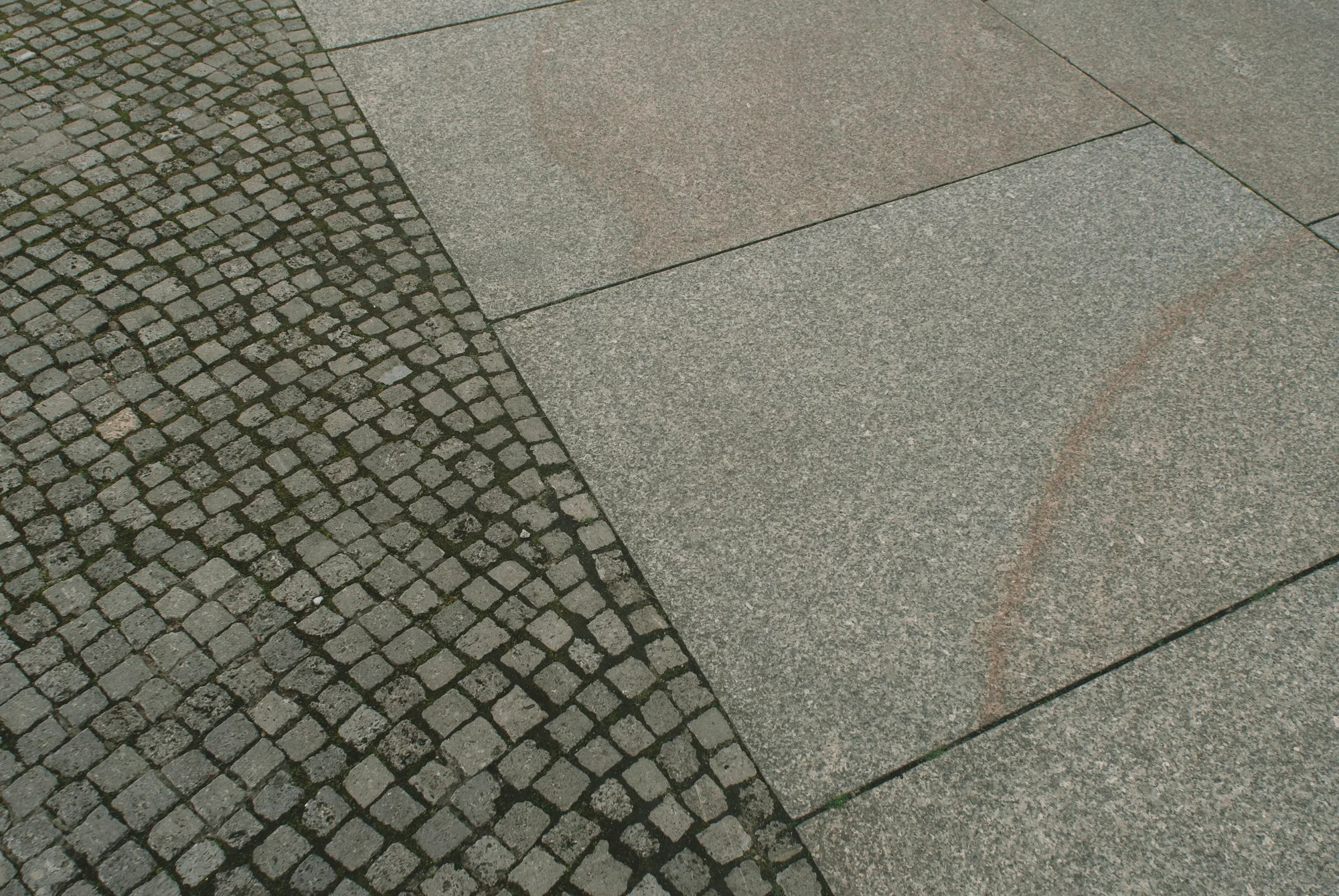
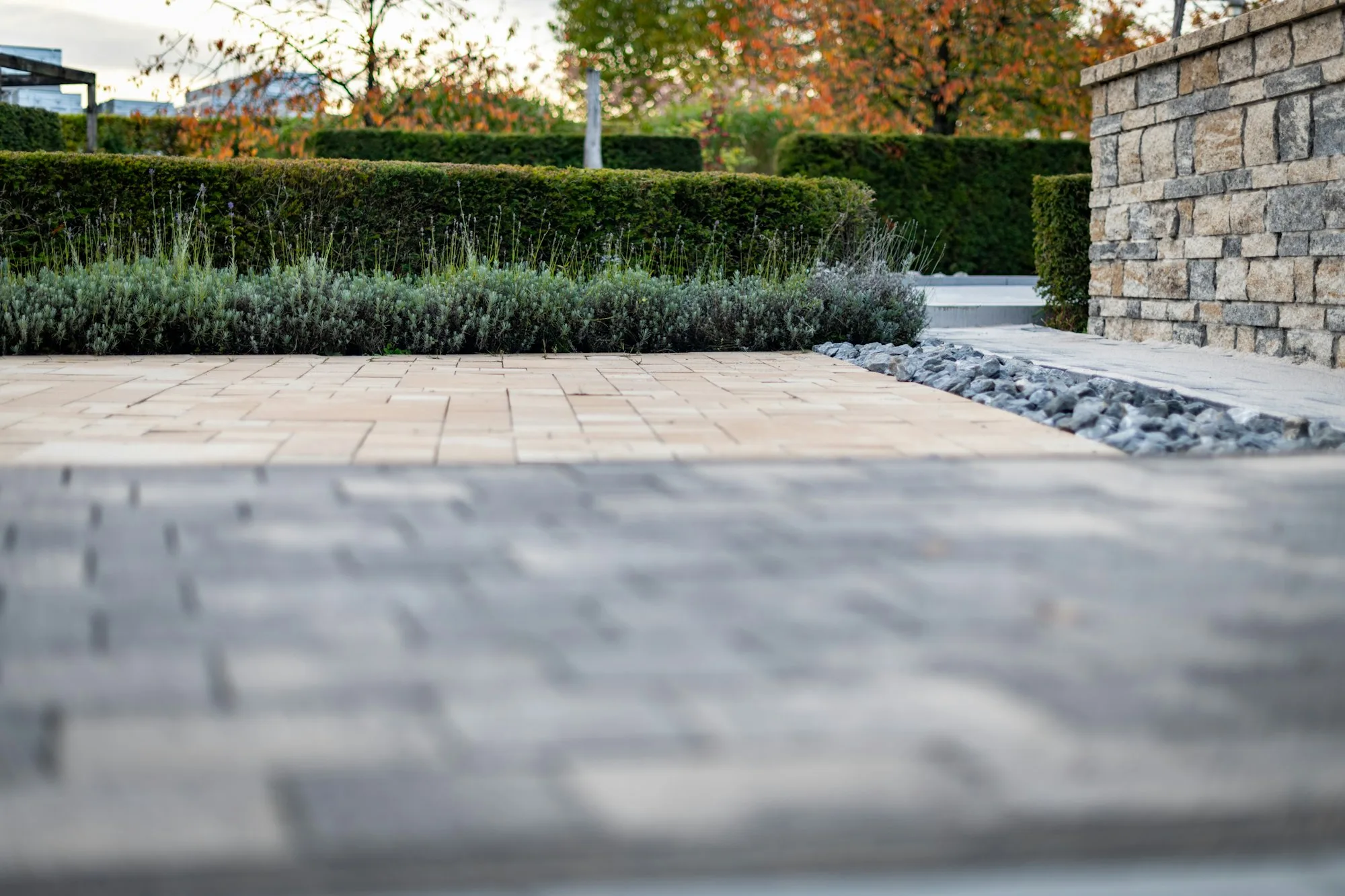
Travertine, limestone, porcelain, and concrete or clay pavers, selected for color, texture, and how each performs underfoot and in the sun.
[02]Design
Patterns, borders and edges, slip resistance around water, and the transitions to steps, planting, decking, and the house.
[03]Delivery
Excavation and base preparation, grading and drainage, edge restraint, setting, jointing, and sealing where the material calls for it.
Overview
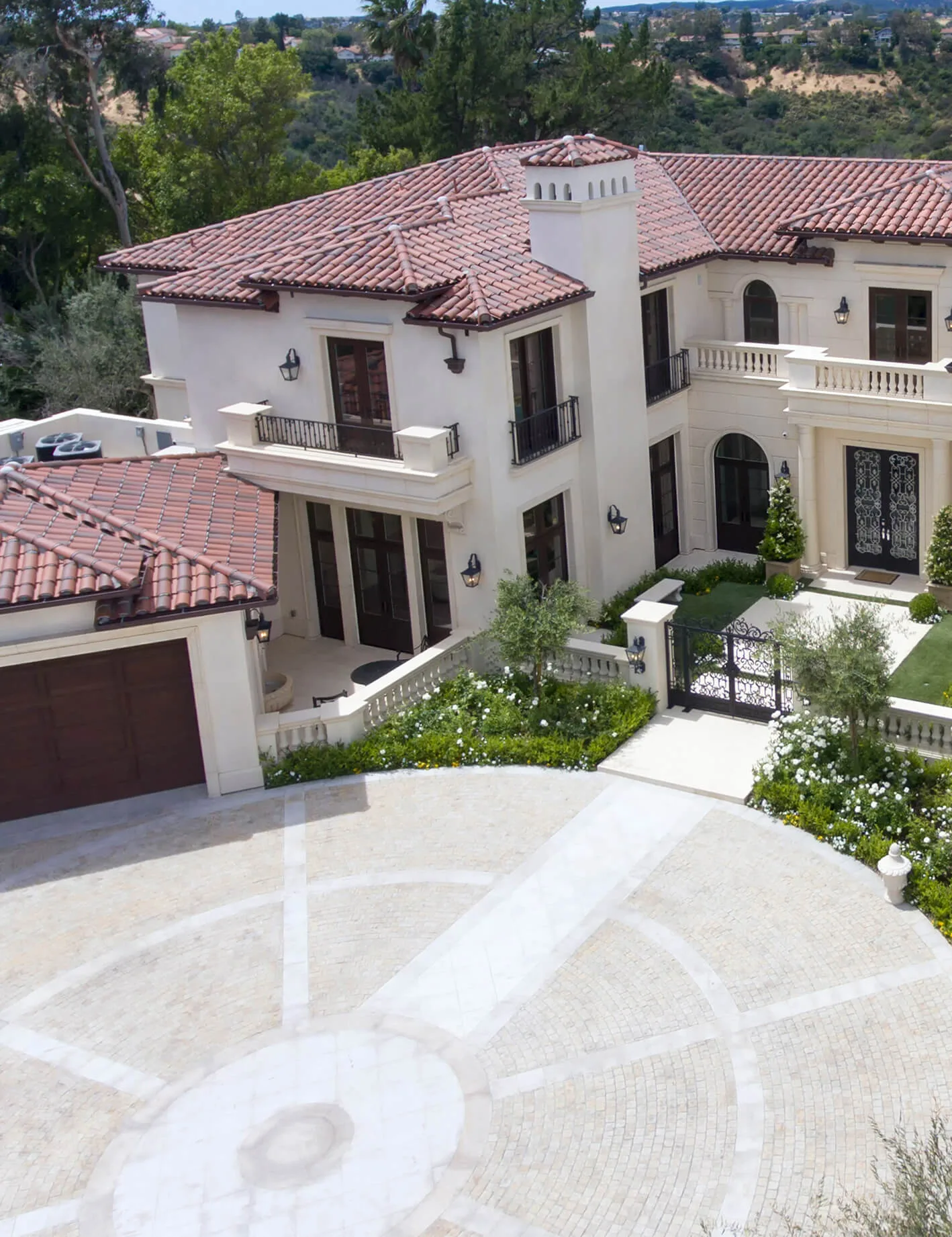
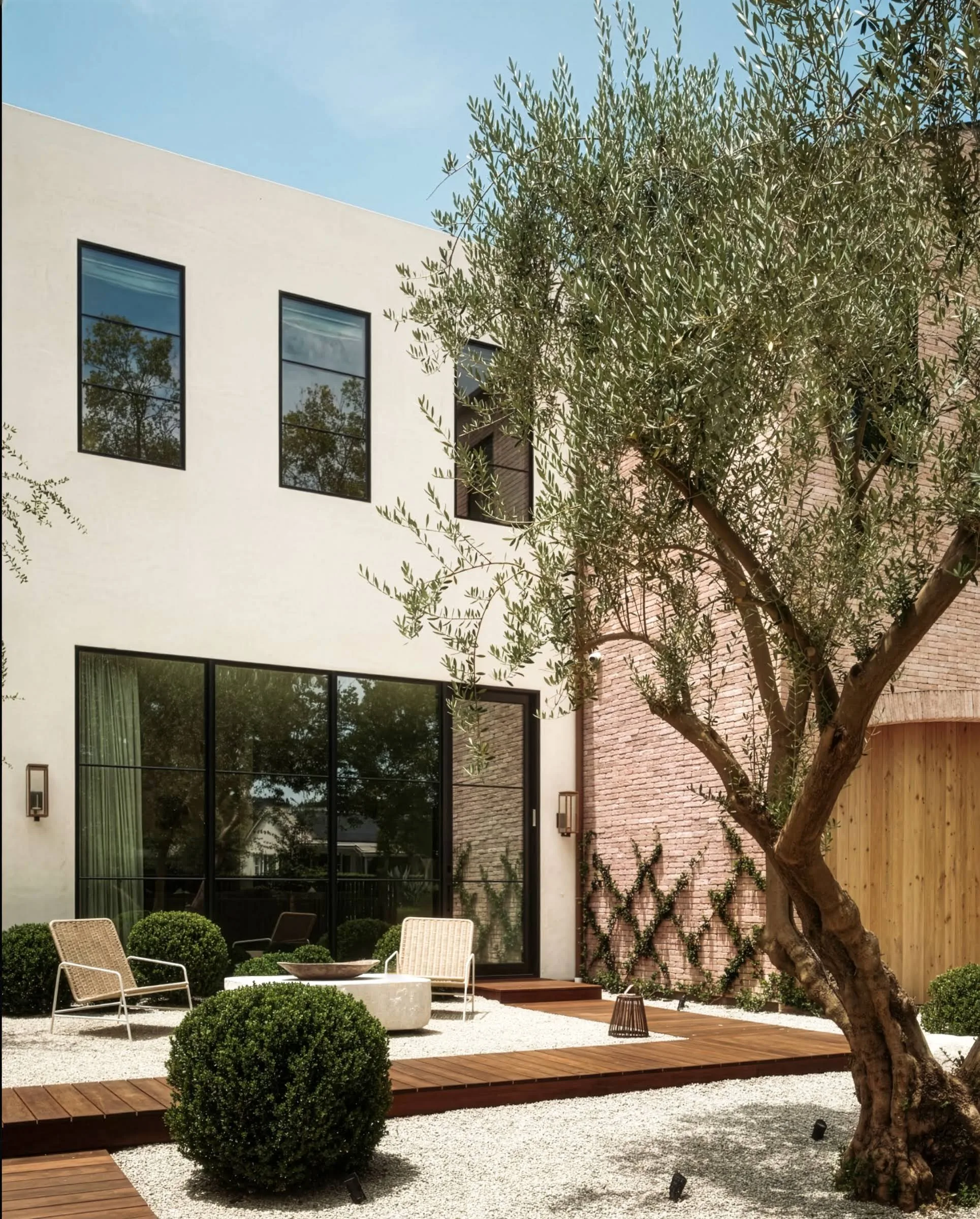
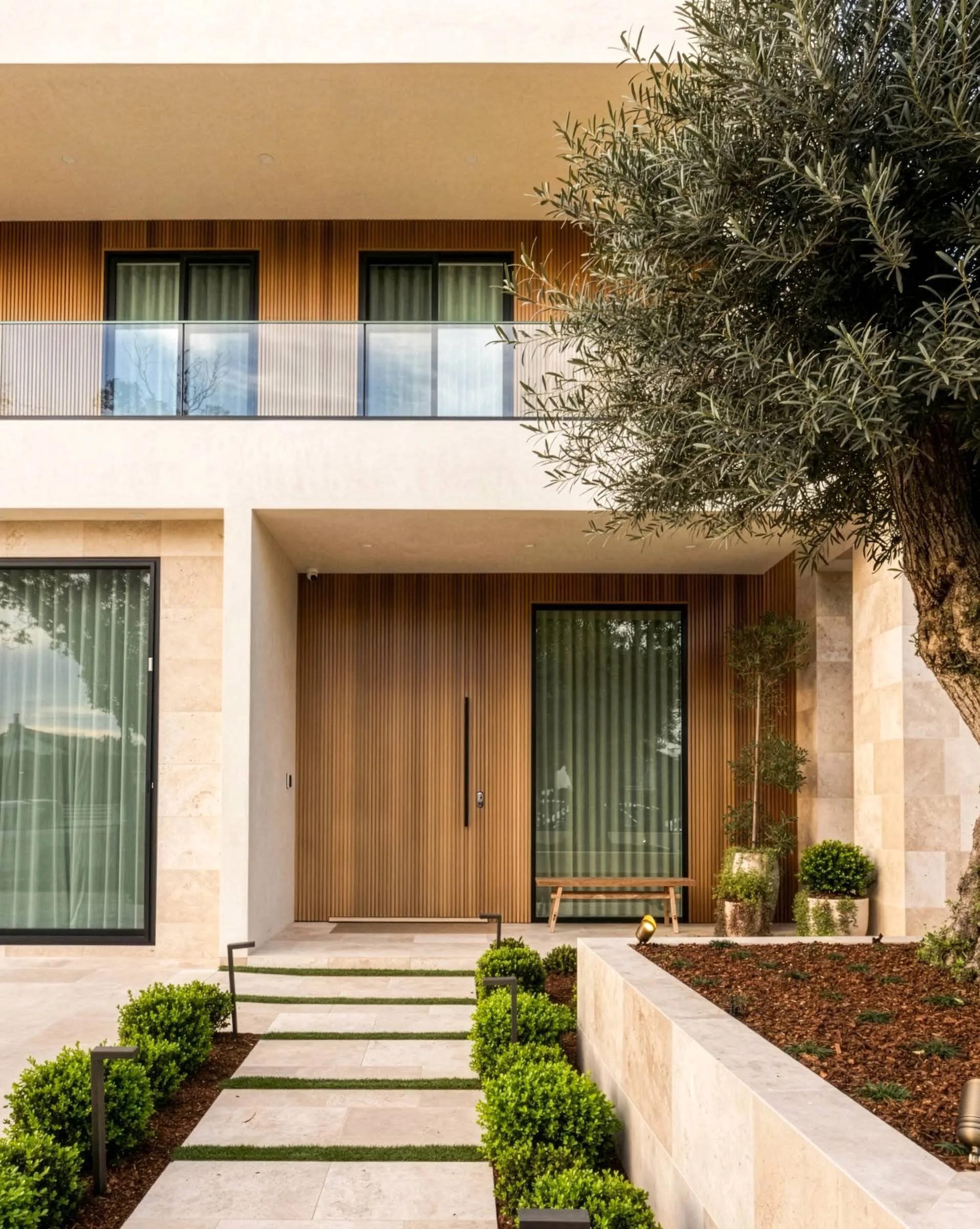
Pavers and natural stone are the surfaces people walk, gather, and live on, so they set much of the character of a property. Pavers are durable, repairable, and flexible in pattern and color. Natural stone brings a variation in tone and texture that manufactured materials rarely match. We plan each surface around the architecture of the home, the way people move across it, and the planting and structures at its edges, so it reads as part of the property rather than an addition to it.
How we approach it
Most surface problems start below it, so we begin there. We review soil conditions, slopes, and where water will go, then set the base build-up to the load the surface will carry: a motor court and a garden terrace call for different preparation. Stone is laid out before it is set, to balance color and veining across the area, and joints and slopes are set to the material and location.
Part of the whole property
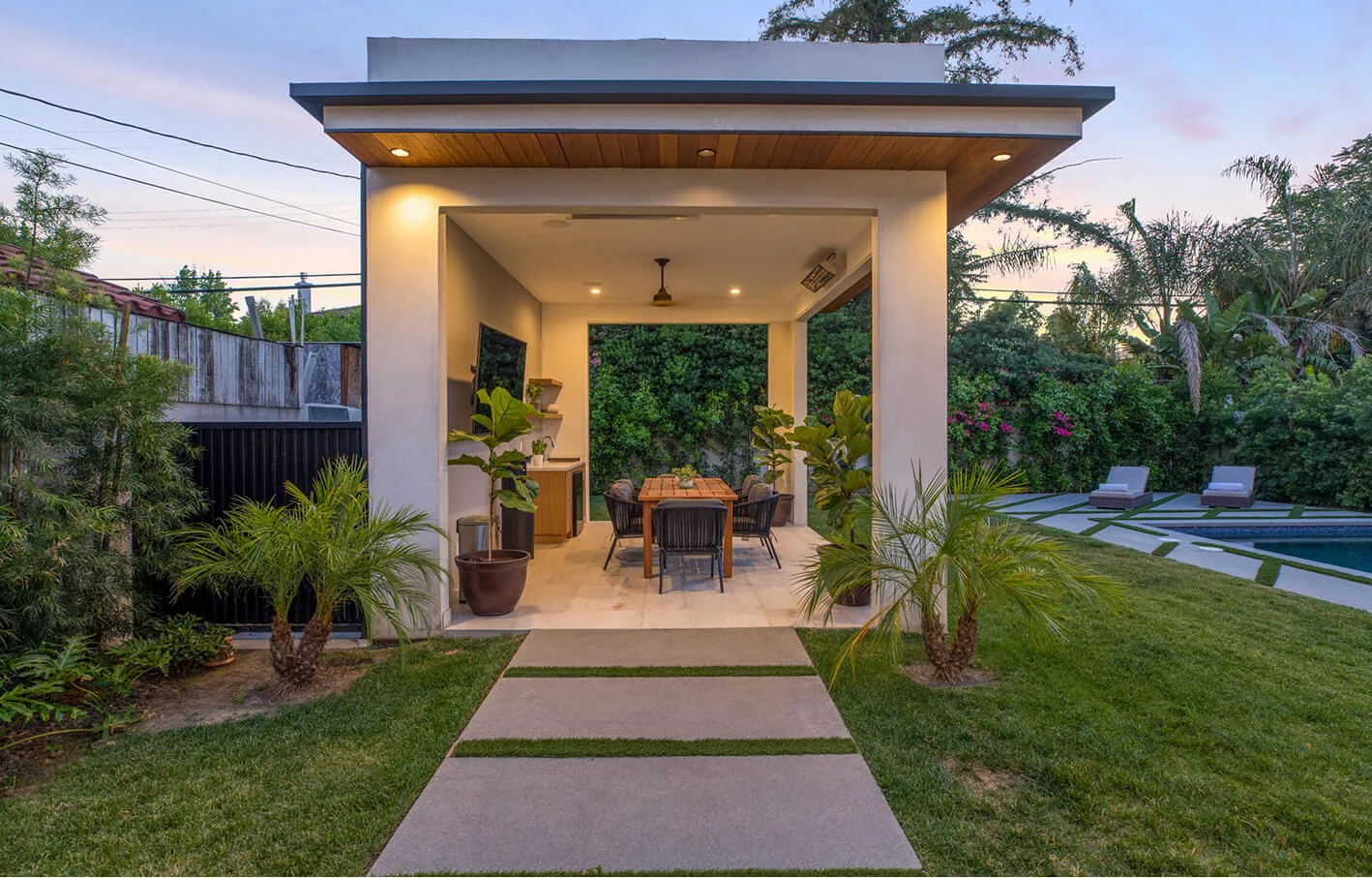
Pavers and stone often connect several parts of a project: the drive meets the entry walk, the terrace meets the pool deck, the patio meets the lawn. Because one team handles design, hardscape, pools, outdoor living, and landscape, those transitions are planned together, and lighting conduit and irrigation sleeves are in place before the base goes down.