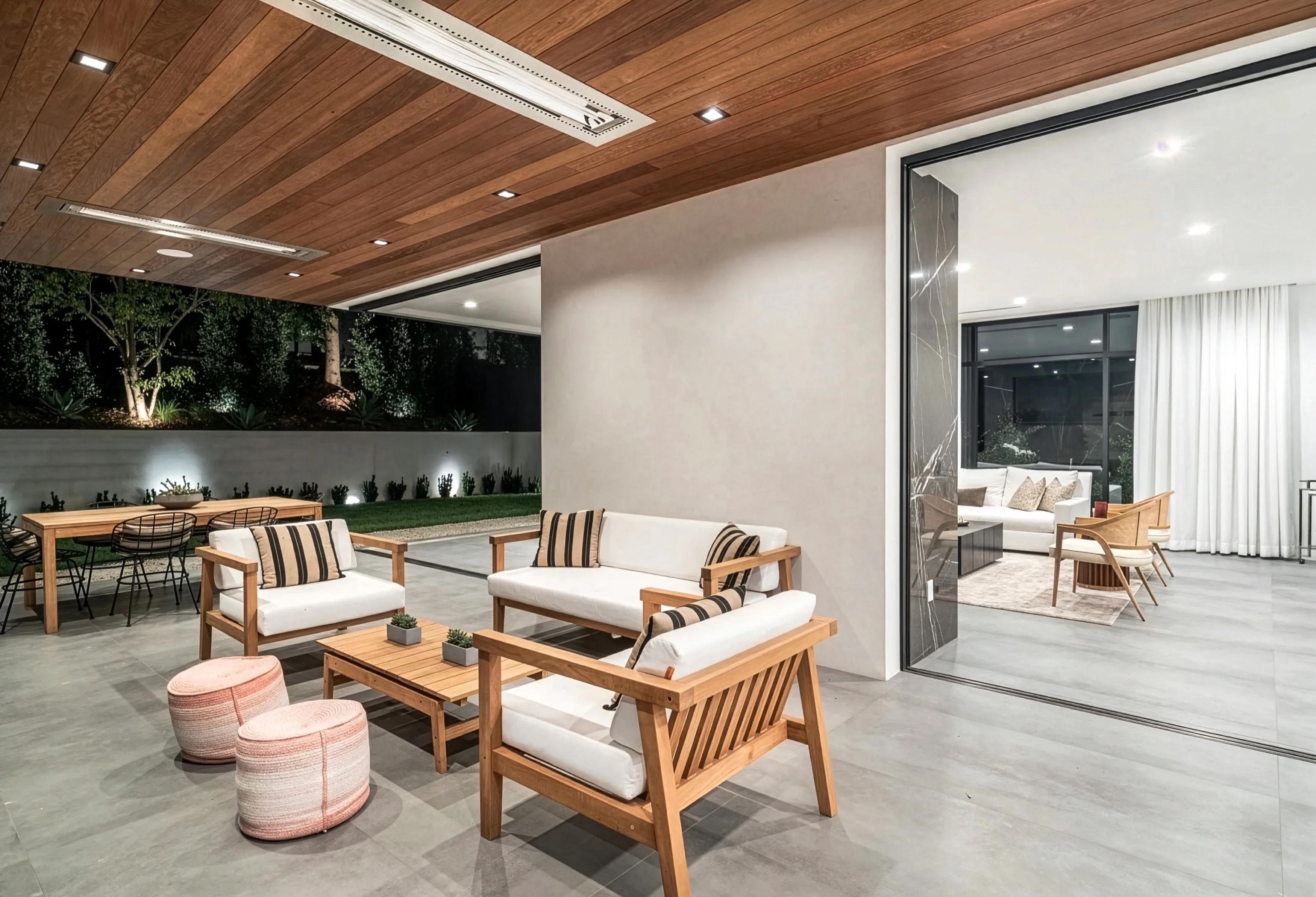
Beyond the summer: designing year-round outdoor havens
From masonry fire features to climate-controlled pavilions, extend outdoor living through every season.
Year-round outdoor living is a planning problem before it is a furniture problem. Fire features, wind protection, overhead structures, and radiant warmth must be integrated into the architecture from the start. Buying heavier cushions or a portable heater cannot rescue a courtyard that was never designed for cool evenings, coastal breeze, or winter light.
When seasonal comfort is designed into the structure, the landscape remains a destination long after summer ends. The outdoor sanctuary becomes part of daily life, not a three-month amenity waiting for perfect weather.
Comfort as Architecture
True year-round usability depends on microclimate. Orientation, prevailing winds, overhead cover, and thermal mass all shape how a space feels in March as much as in July. A pavilion or pergola can block midday sun while still admitting winter light. Strategic walls and planting can calm wind without creating a fortress. Fire features provide gathering points that draw people outdoors when temperatures drop.
These elements only succeed when they are part of the site plan, aligned with views, circulation, and the home’s architecture, rather than added as freestanding accessories after the hardscape is complete.
Fire, Shelter, and Warmth
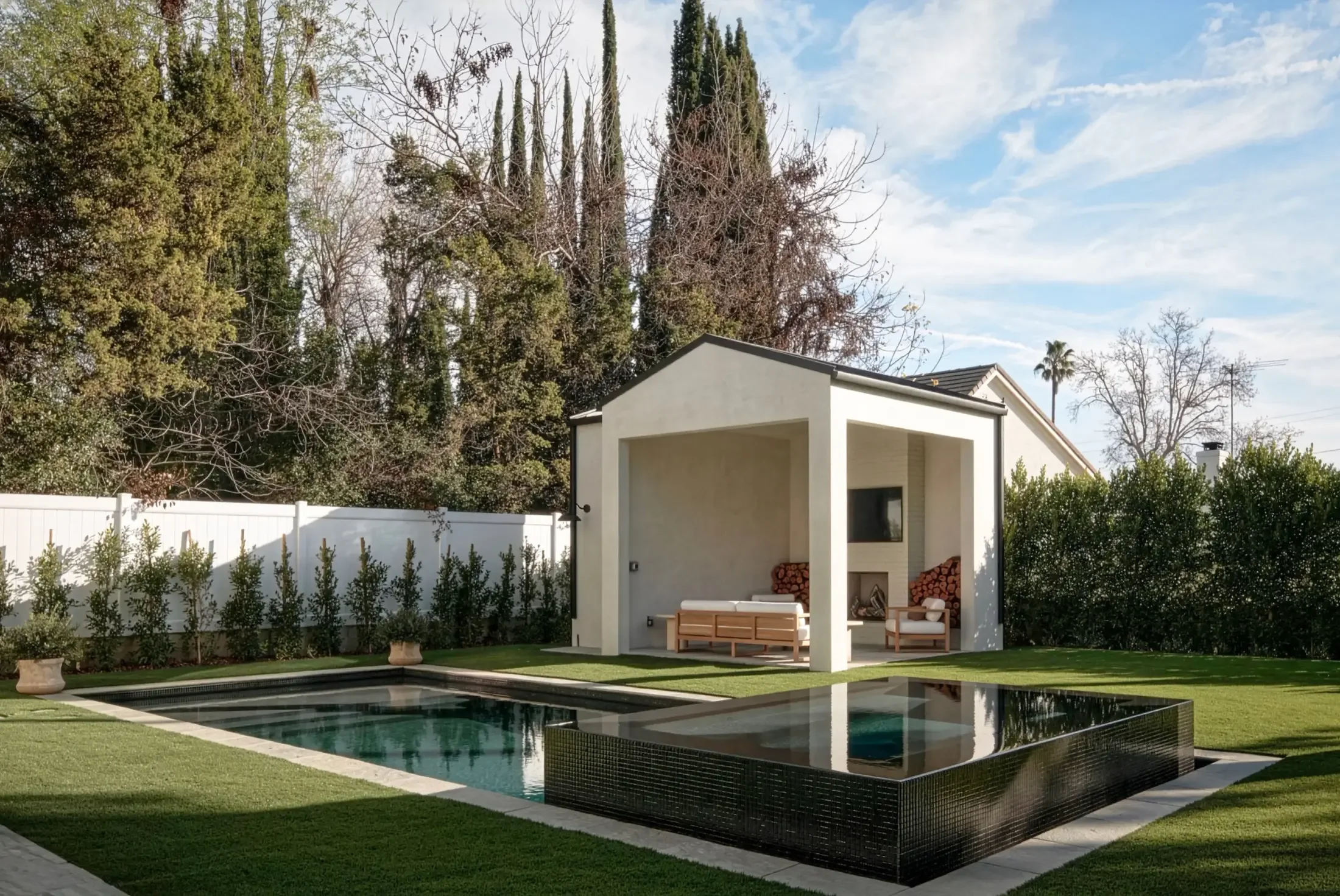
Masonry fire pits, fireplaces, and linear fire features do more than provide heat; they establish social centers and visual anchors after dark. Integrating them with seating walls, paving patterns, and chimney or flue detailing keeps them architectural rather than appliance-like. Clearances, fuel sources, and code requirements should be resolved during design so the finished feature looks inevitable.
Overhead structures, from open timber pergolas to fully enclosed climate-controlled pavilions, extend the calendar further. Shade cloth, louvers, glass, and radiant systems can be specified to match how the household actually uses the space: casual mornings, evening entertaining, or all-weather dining. The more closely shelter matches lifestyle, the more often the outdoors is chosen over the indoors.
Planting Through the Seasons
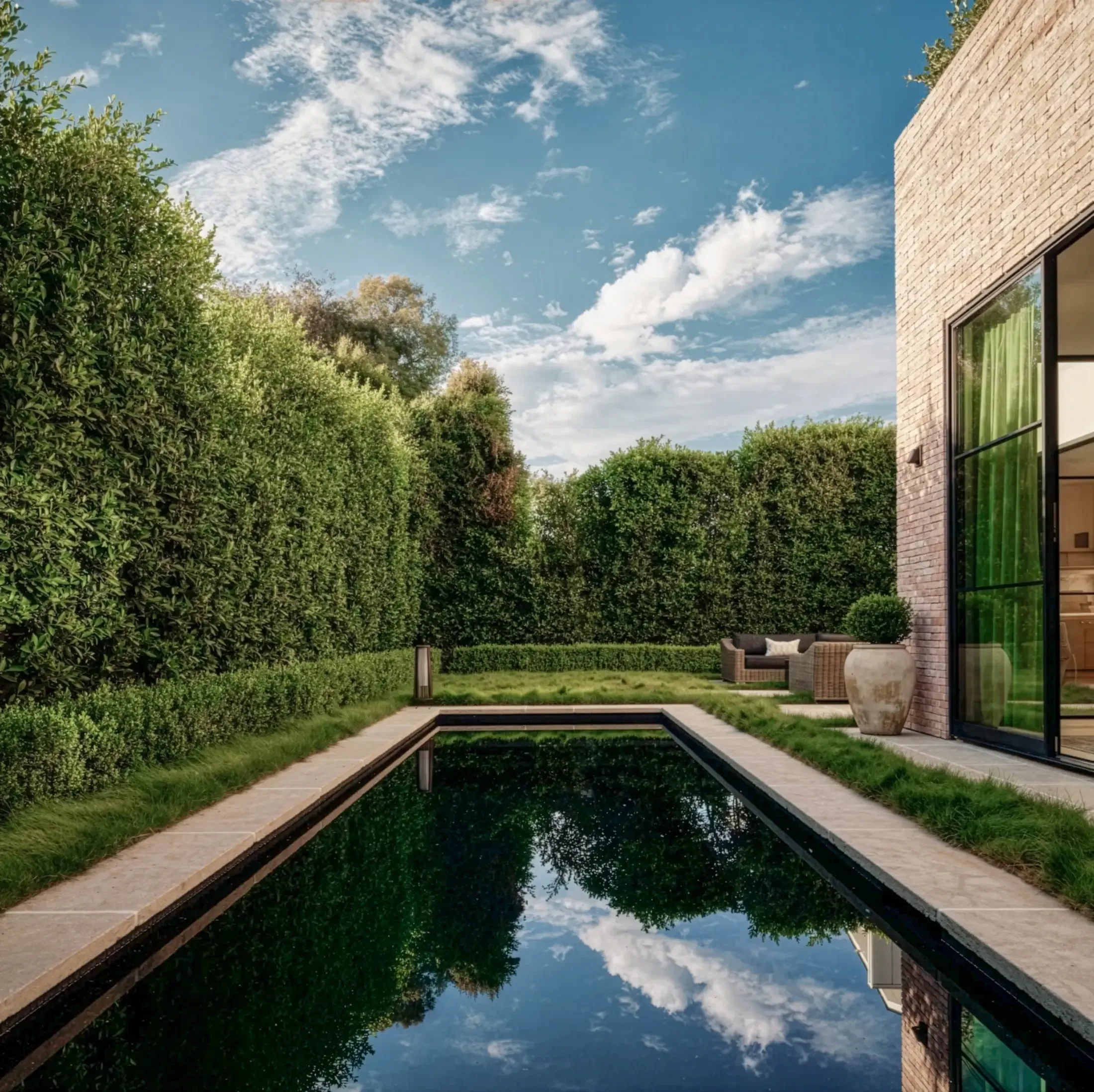
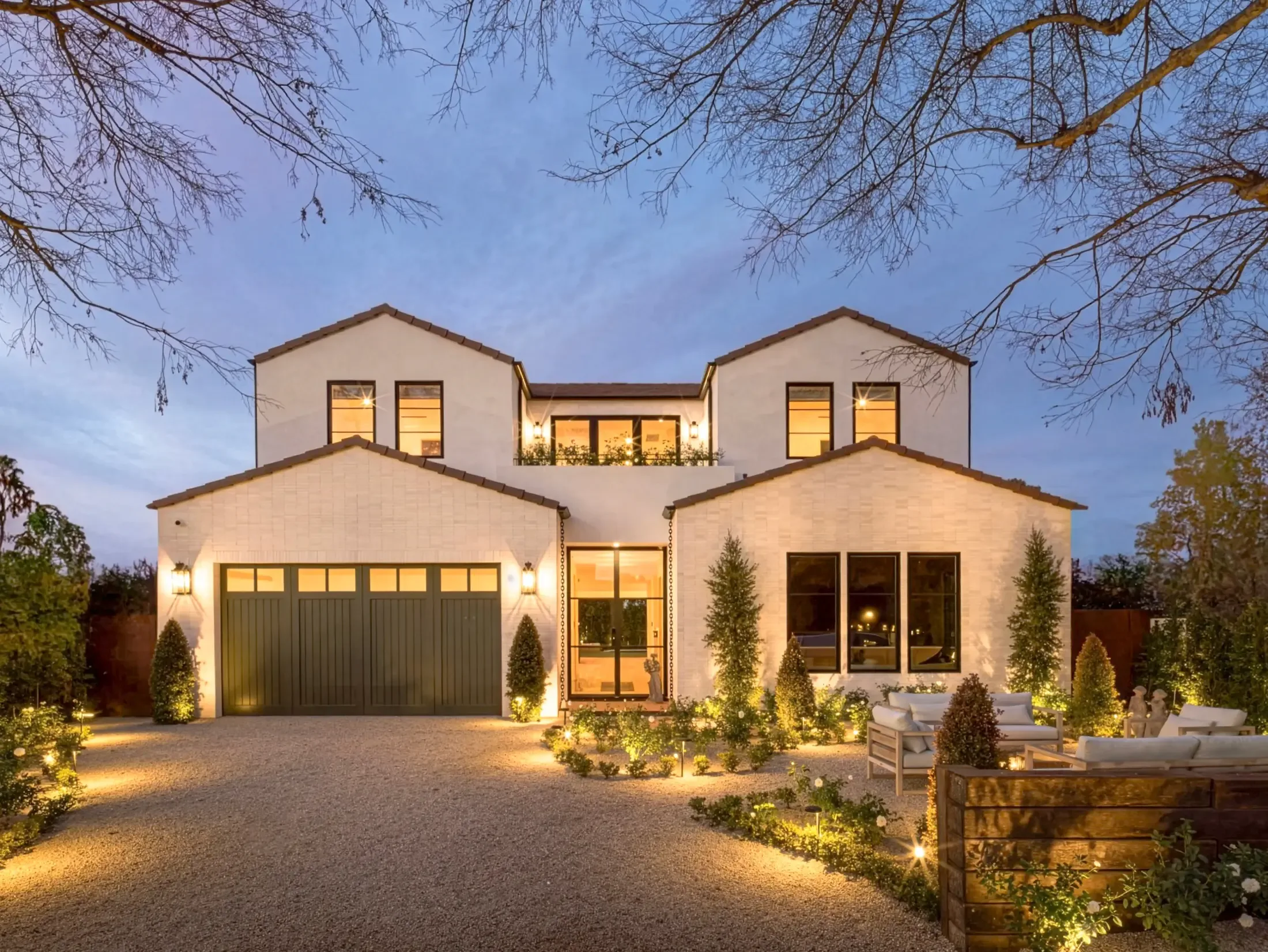
A year-round haven is not hardscape alone. Evergreen structure, seasonal bloom, and winter interest keep the garden composed when deciduous plants go dormant. Lighting then carries that composition into evening hours. Irrigation and drainage must support planting through wet and dry seasons without undermining paving or foundations.
Designing for four seasons means accepting that beauty shifts. The goal is not a static summer photograph, but a landscape that remains inviting as light, foliage, and temperature change.
One Plan, Every Month
Segmented construction often delivers a summer-ready backyard that sits idle the rest of the year. A unified design-build approach asks earlier questions: Where will you gather in November? How will wind move across the dining court? What overhead cover makes spring evenings comfortable?
Answering those questions in the architecture, not in last-minute purchases, creates outdoor rooms that earn their place on the property every month of the year. Beyond summer is not a product category. It is a design standard.