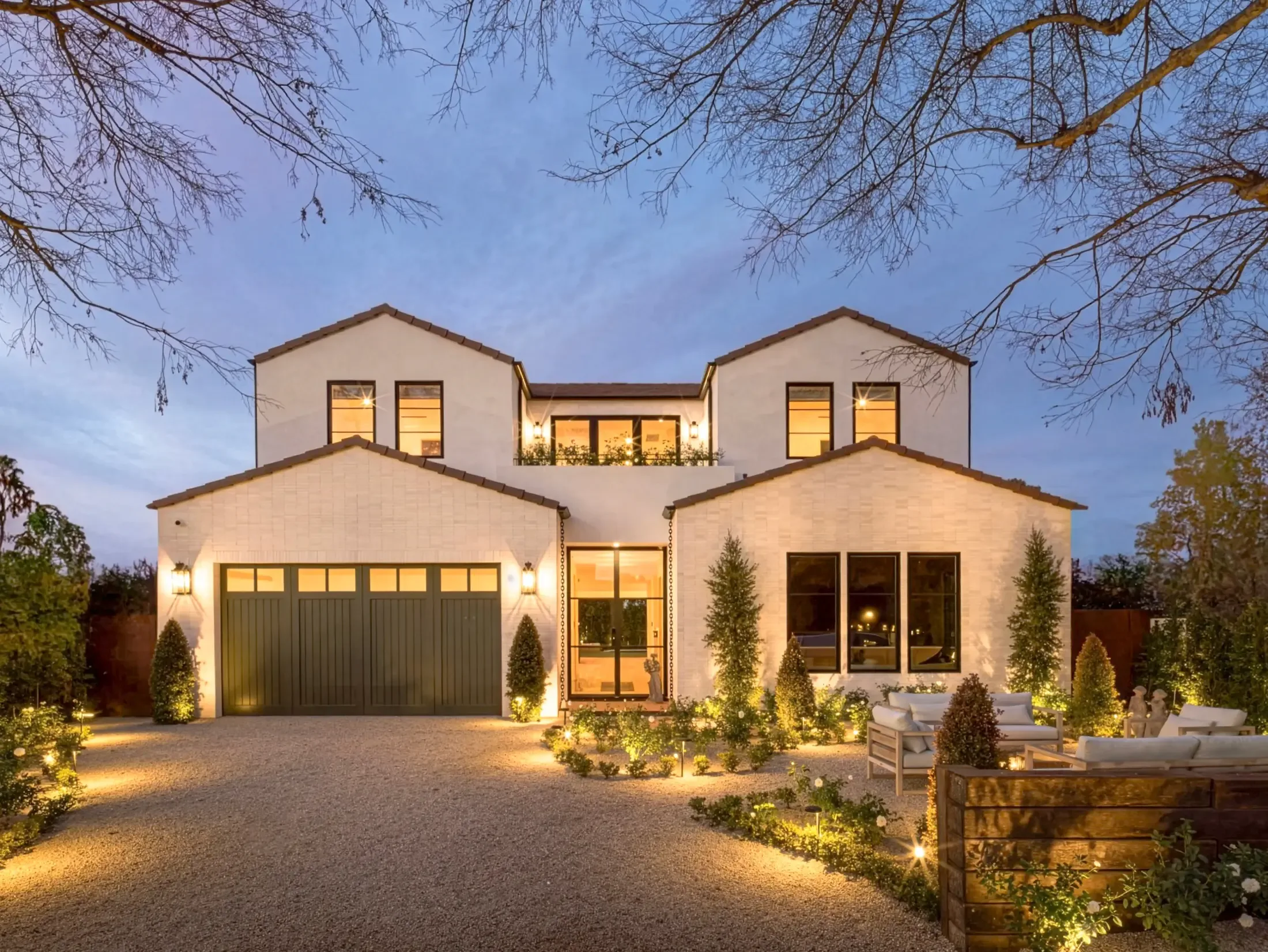
Illuminating the architecture: the art of landscape lighting
How architectural illumination transforms outdoor environments after dusk with depth and atmospheric elegance.
Landscape lighting should reveal architecture, not compete with it. Layered illumination highlights textures, frames circulation, and extends usable hours outdoors without glare or visual noise. When fixtures are scattered as an afterthought, the nightscape becomes a patchwork of hot spots and dark voids. When lighting is engineered alongside masonry, planting, and water features, every beam has a purpose and every shadow is intentional.
At Artscape Living, illumination is treated as a design discipline equal to hardscape and structure. The goal is an outdoor environment that remains composed after dusk, elegant, navigable, and atmospheric.
Layers, Not Floodlights
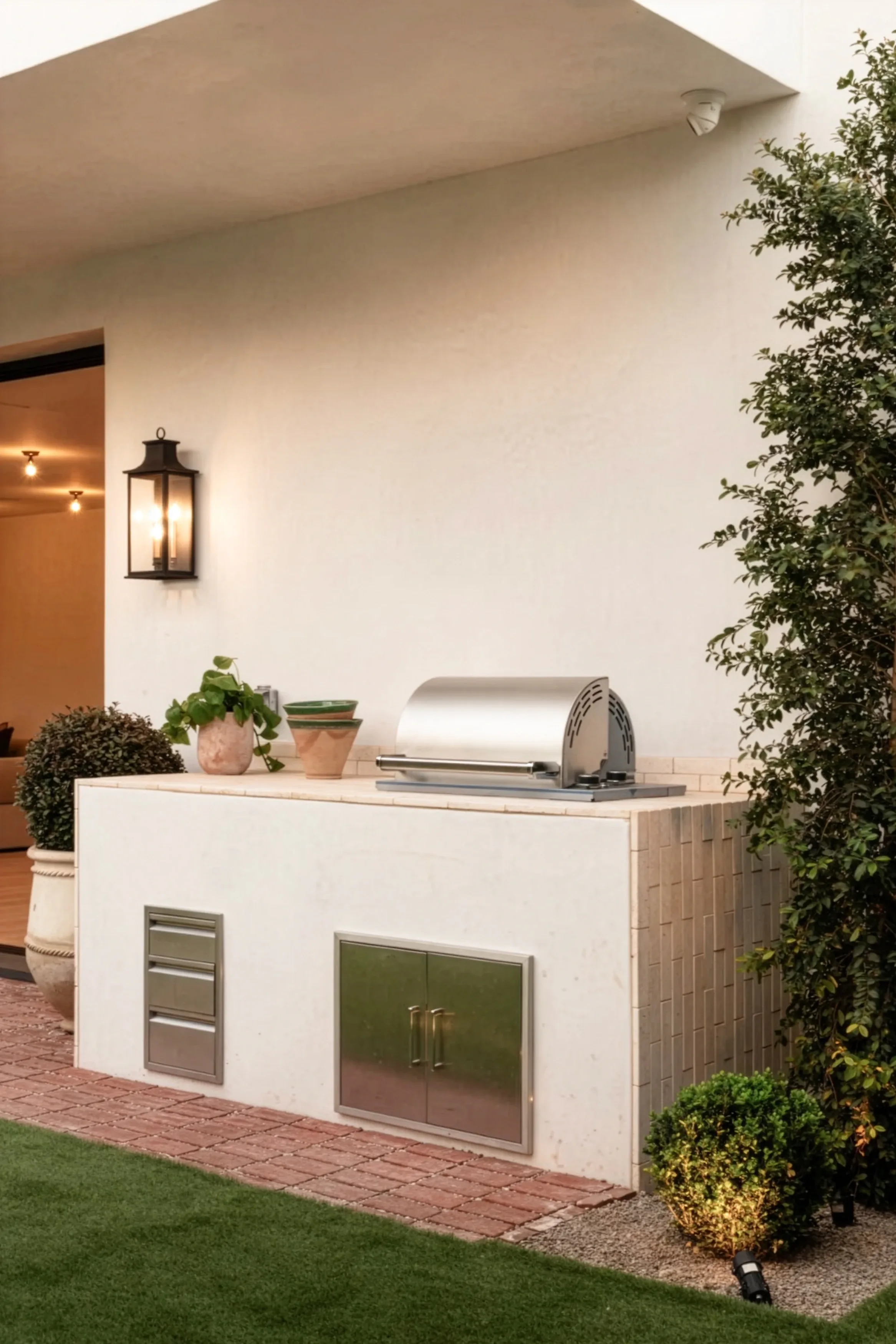
Architectural landscape lighting works in layers. Ambient light softens the overall field so spaces feel inhabitable. Task light supports cooking, dining, and circulation. Accent light draws the eye to stone texture, tree canopies, water movement, and façade details. Safety lighting clarifies steps, edges, and transitions without announcing itself.
Flooding a courtyard with a single bright source flattens depth and creates harsh contrast. Layering preserves the drama of darkness while guiding movement and celebrating material. Fixtures themselves should recede; the light is the design, not the hardware.
Designed With the Build
Conduit, transformer locations, and fixture placements are easiest, and cleanest, when planned during hardscape construction. Retrofitting lighting into finished paving and walls often means compromised positions, visible wiring, or damaged surfaces. Coordinating electrical infrastructure with retaining walls, steps, and planting beds keeps the nightscape as refined as the daytime composition.
Planting and lighting must also evolve together. Uplighting a specimen tree requires understanding mature canopy size; grazing a textured wall requires knowing the final masonry finish. A unified design-build process aligns these decisions so illumination and landscape mature as one.
Atmosphere Without Glare
Luxury outdoor lighting is measured as much by what it conceals as by what it reveals. Shielded fixtures, carefully chosen beam angles, and restrained lumen levels protect neighborly dark skies and keep the focus on architecture rather than bulbs. Warm color temperatures typically flatter stone, timber, and planting, while cooler tones can feel clinical against natural materials.
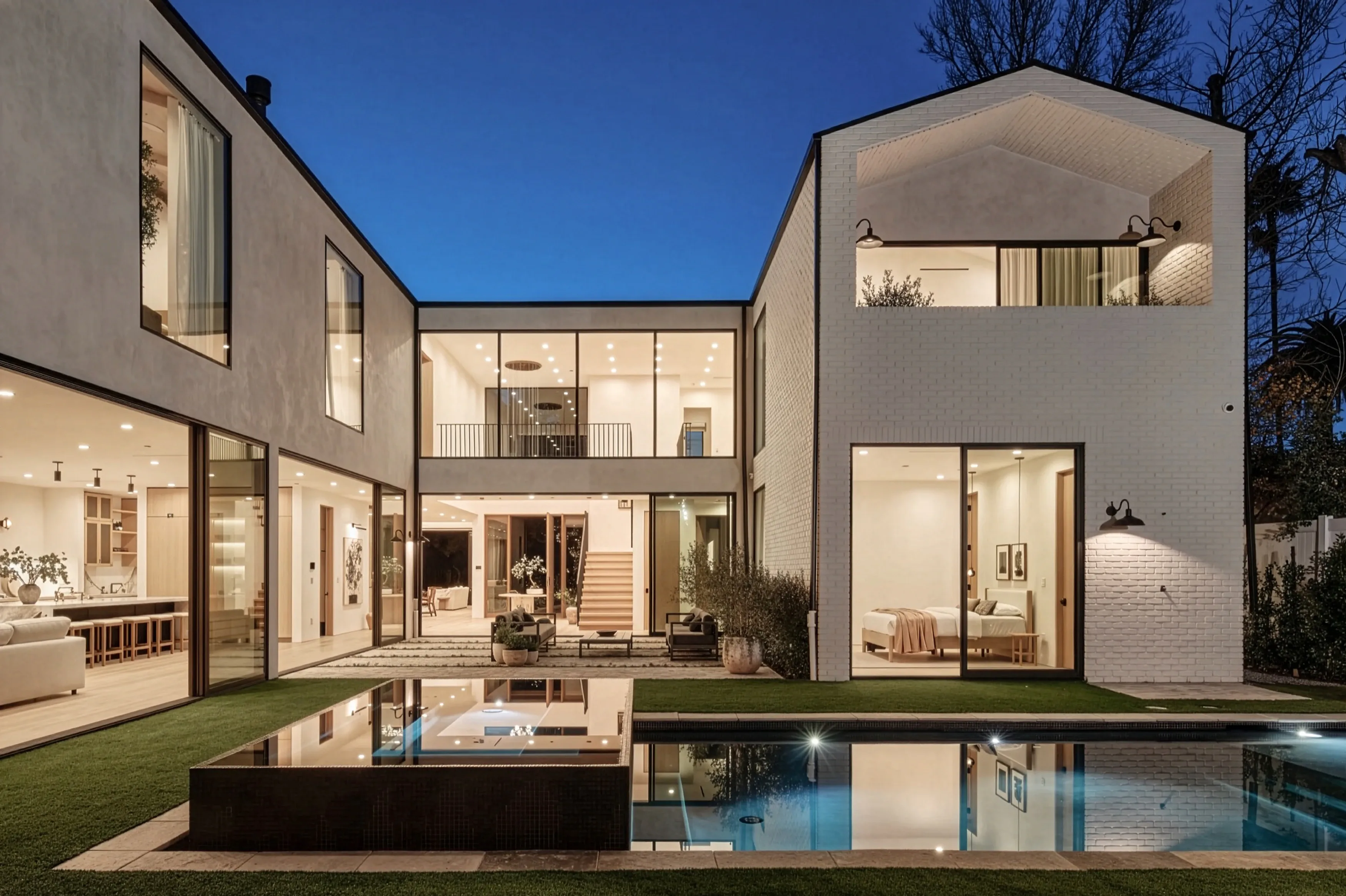
Water features and fire elements gain particular drama after dark when lit with precision, subtle underwater glow, soft edges on fountains, or low accent on fire surrounds. Over-lighting these elements robs them of mystery; under-lighting leaves them invisible. Balance is the craft.
Extending the Day
Well-planned lighting transforms outdoor rooms into evening destinations. Dining terraces stay inviting, garden walks remain legible, and architectural façades continue to define the property’s character long after sunset. Controls, zones, scenes, and timers, allow the same landscape to shift from intimate gathering to quiet late-night calm.
Exceptional illumination is never decoration applied at the end. It is architecture after dusk: intentional, layered, and inseparable from the spaces it reveals.