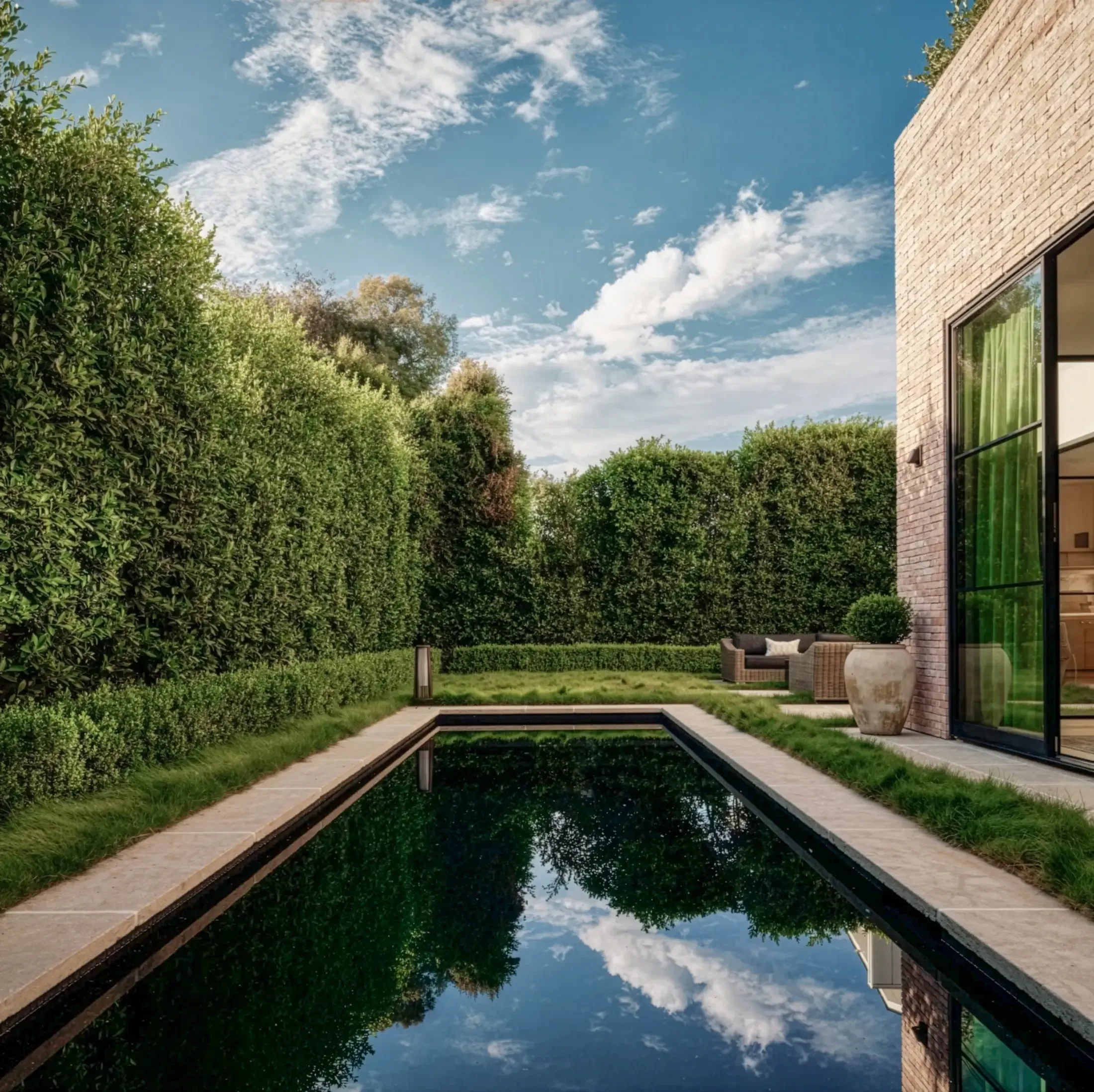
Structural harmony: selecting the right stone for your custom pool
How material selection and structural planning work together when stone surrounds a custom residential pool.
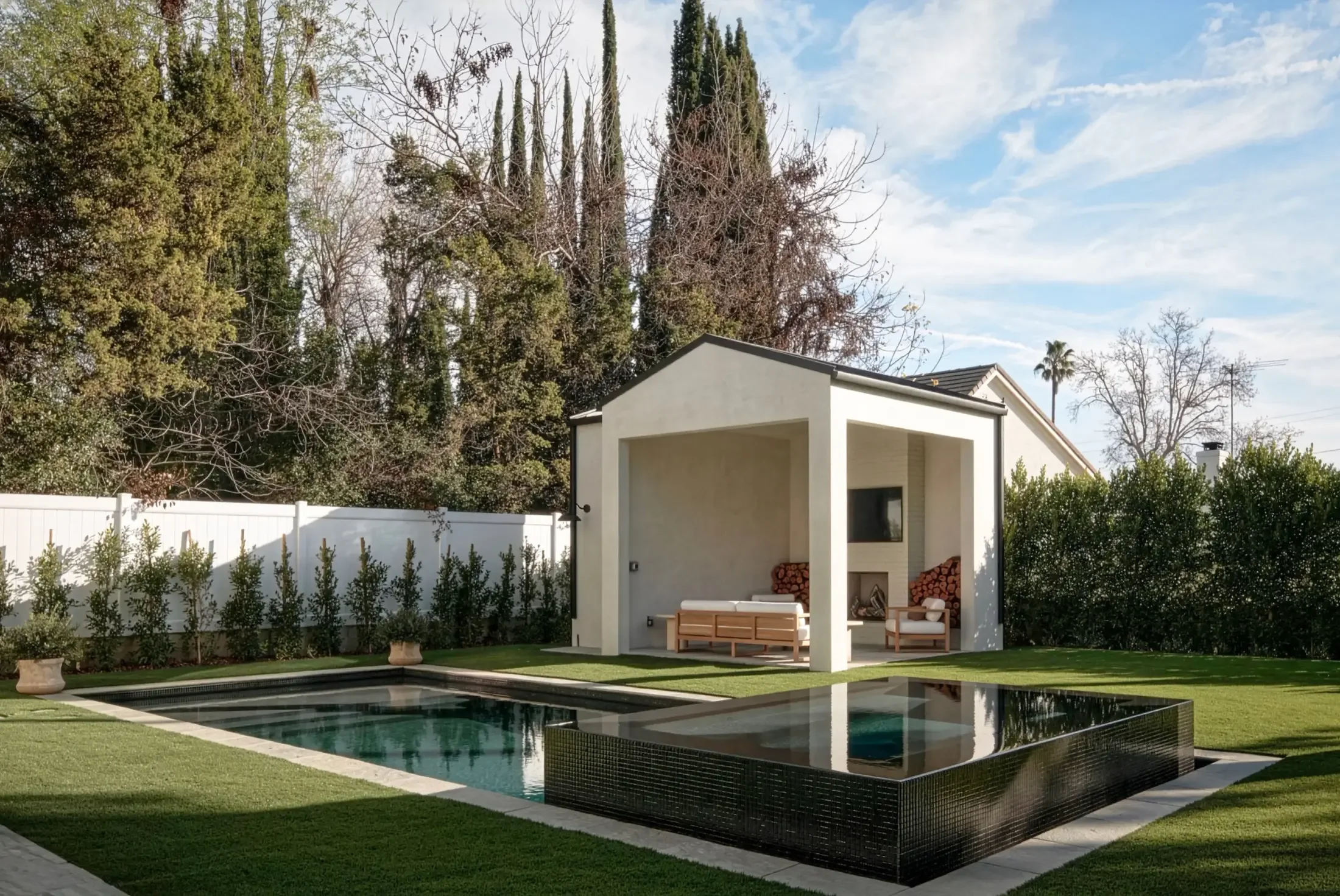
Selecting stone for a custom pool is never only an aesthetic exercise. Coping, decking, and waterline materials must withstand constant moisture, temperature swings, and structural movement while remaining visually continuous with the rest of the landscape. A slab that looks perfect in a showroom can fail at the water’s edge if its absorption, finish, and installation method were never validated against the realities of a swimming environment.
When design and construction teams collaborate from the start, stone choices are validated against elevation, drainage, and installation methods before a single piece is ordered, preserving the architectural intent without late-stage substitutions.
Beauty Under Pressure
Pool stone lives under uniquely demanding conditions. Continuous moisture, chemical exposure, barefoot traffic, and solar heat all test color stability, slip resistance, and durability. Honed, flamed, or textured finishes can improve traction and visual warmth, but each finish interacts differently with sealing, cleaning, and long-term wear.
Coping deserves particular attention. It is the tactile and visual transition between water and deck, touched constantly, seen from every angle, and structurally tied to the pool shell. Thickness, overhang, edge profile, and jointing must be precise. Inconsistent coping is one of the fastest ways a luxury pool begins to look ordinary.
Continuity With the Landscape
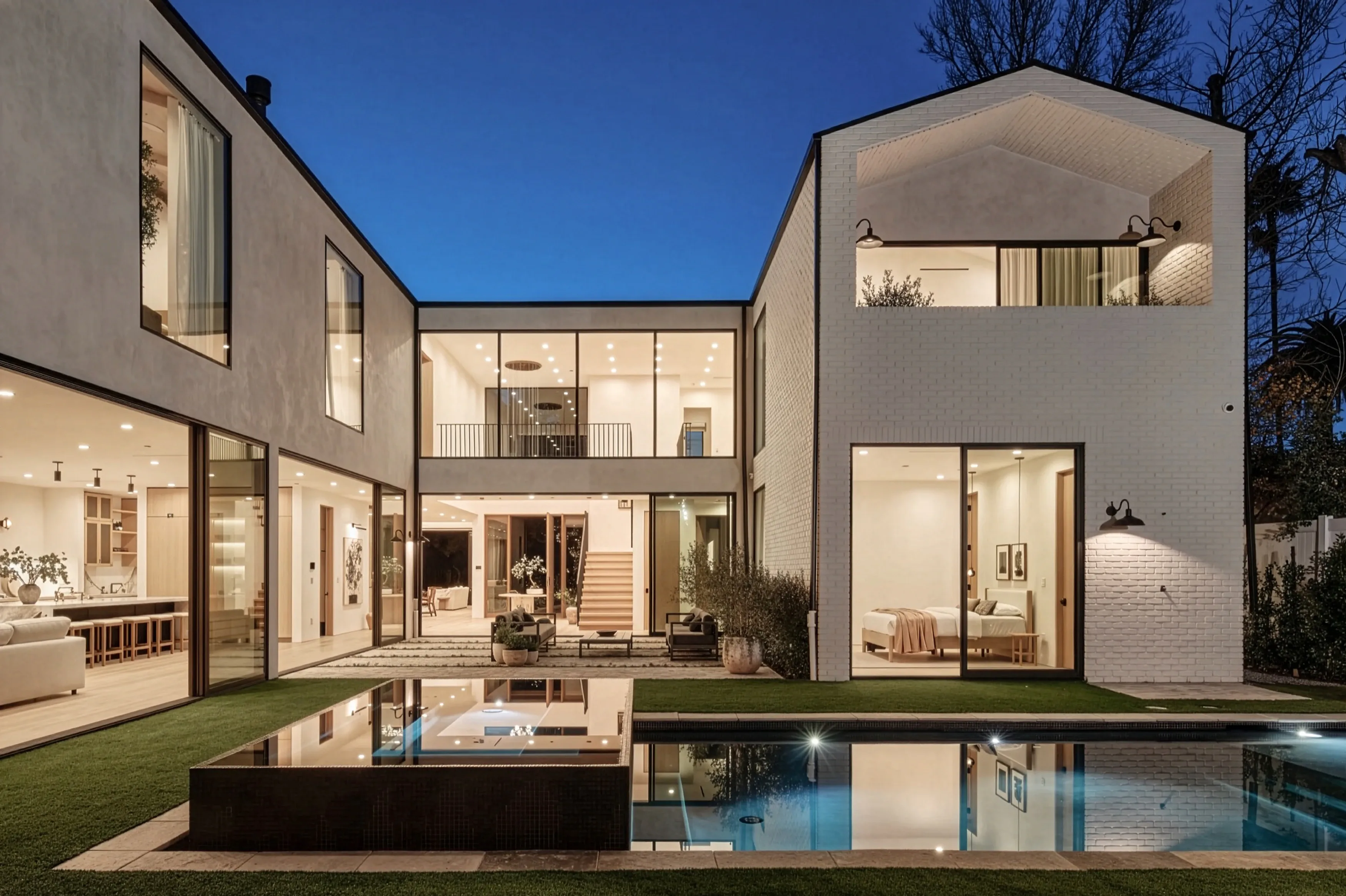
The strongest pool environments share a material language with surrounding terraces, steps, and garden walls. That does not require identical stone everywhere; it requires a deliberate family of colors, textures, and scales. Deck fields can shift in module size from coping bands; interior flooring can inform outdoor stone so indoor-outdoor thresholds feel intentional.
When the pool contractor, mason, and landscape team operate separately, material decisions often diverge. One trade substitutes a more available stone; another adjusts elevations for ease of build; the waterline tile arrives in a palette that no longer relates to the deck. Unified oversight prevents those fractures.
Structure First, Stone Second
Stone is only as successful as the structure beneath it. Substrate preparation, movement joints, slope to drain, and waterproofing details determine whether the finished surface remains true. Pool decks that tip toward the house, pond at furniture groupings, or crack at rigid corners are usually failures of planning, not of the stone itself.
Elevation coordination is critical. Door thresholds, spa spillways, vanishing edges, and garden steps all lock into a single vertical story. Resolving that story early means stone can be cut and installed to the architecture, rather than forcing architecture to apologize for the stone.
Specifying Without Compromise
The right stone for a custom pool balances aesthetics, performance, and constructability. Samples should be reviewed wet and dry, in the light of the actual site. Lead times and fabrication methods should be confirmed before schedules are locked. Sealers and maintenance protocols should be part of the conversation, not an afterthought at handover.
Structural harmony is the result: a pool edge that feels inevitable, a deck that performs through seasons of use, and a material palette that ties water, garden, and home into one composed environment. That harmony is designed and built together, or it does not appear at all.